The Martindale method or Martindale durability test is a procedure that assesses the durability and suitability of test materials for domestic or industrial use.
The fabric to be tested is stretched onto the lower plates of the Martindale machine. Small discs of waxed wool constantly rub against the test fabric. The condition of the test fabric is checked several times during the test and visible changes to the fabric, cracks and wear are noted. The test is complete when the waxed wool breaks or a more noticeable change occurs in the appearance of the test fabric.

The results obtained at the end of the test of each fabric sample are rounded to 5000 cycles/rubbing and thus divided into several categories.
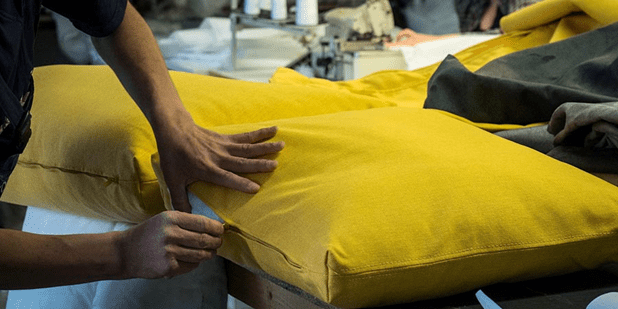
Materials that do not reach 10,000 units are suitable for decoration. These include decorative cushions that beautifully enhance the furniture and have become an indispensable part of every living room due to their multifunctional use.
Materials that are suitable for occasional domestic use due to the delicate yarns in the fabric composition or the delicate construction of the fabric itself. Some decorative fabrics are not suitable for use on surfaces with a greater load, such as sofa beds or movable armchairs. The materials are only suitable for dry cleaning.
From this category of units onwards, materials can be recommended for use on living room furniture subjected to daily use, such as chairs, stools and sofas. They are not suitable for furniture with moving parts such as adjustable recliners.
Suitable for main pieces of furniture with a lot of daily use and for furniture with moving parts. Can also be used for light commercial use.
Suitable for all commercial and of course frequent domestic daily use, including in beds and in adjustable recliners.
In the textile industry there can be competition for higher abrasion test results, but in the real world a value above 50,000 has very little impact on wear.
The Martindale test is used exclusively to measure abrasion. There are many other factors that can affect the wear and tear of a piece of furniture’s upholstery, including the chemicals used in washing the fabric, UV radiation and surface treatments such as fabric protection or fireproofing treatments.